What Vercel Shipped at Ship London 2026 — and How Our Predictions Held Up
We spent the day at Vercel Ship London. Here's the recap: eve (an agent framework), the Agent Stack, Vercel Connect, and enterprise controls for agents — plus an honest scorecard against the predictions we made beforehand.
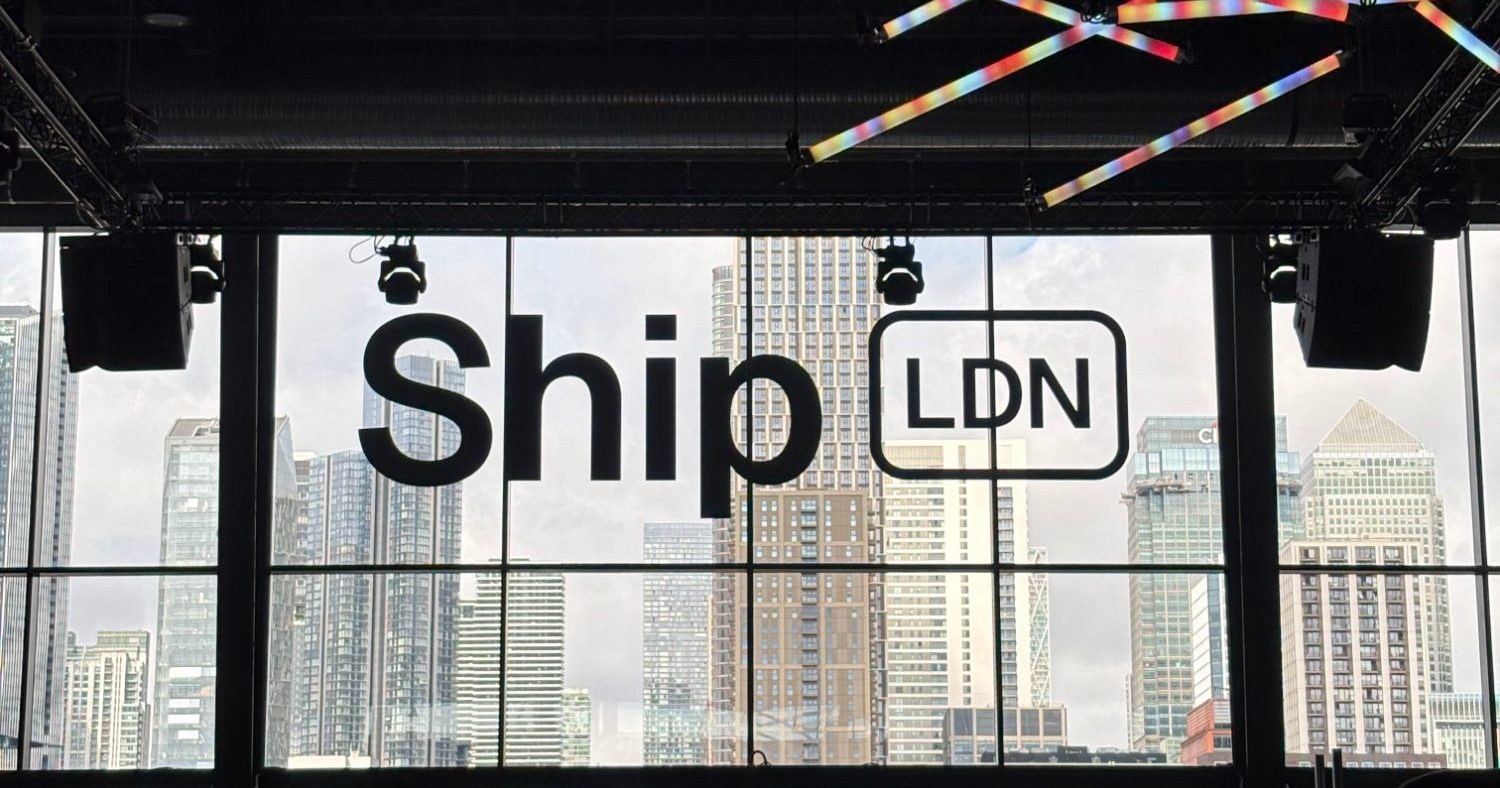
I am writing this on the way home from Vercel Ship London, and I am still buzzing. What a day: sharp talks, genuinely impressive demos, a room full of people building the same future we are, and a strong run of product announcements that actually matter. I will say the quiet part out loud — I am already counting down to next year.
If Ship 2025 was the year Vercel rebranded as the AI Cloud, Ship London 2026 was the year it made one promise concrete: building an agent should be as boring-in-a-good-way as building a website. The whole day circled one theme — agents in production — and, more pointedly, the unglamorous half of that phrase: running them securely, at scale, without losing the developer experience that made Vercel what it is.
One framing from the stage stuck with me, because it is exactly our experience too:
"We run 100+ agents in production. Deploying them was easy. Making them secure at scale wasn't."
That tension — easy to ship, hard to secure — is the thread running through everything announced. Vercel also shared that agents now account for more than half of all deployments to its infrastructure, with customers like DoorDash, Stripe, OpenAI, Helly Hansen and The Weather Company building on it. So this is not a science project; it is where the platform is going.
Here is what shipped — and, because we made some predictions beforehand, how well we called it.
eve — "Next.js for agents"
The headline. eve is a new open-source agent framework, and the pitch landed cleanly on stage: building an agent should mean defining what it does, not assembling all the production plumbing around it. So eve defines an agent the way Next.js defines a web app — as a directory of files.
You start one with a single command: npx eve@latest init my-agent. Inside, the agent is just a folder:
- agent.ts — model and runtime configuration
- instructions.md — the agent's role and system prompt, in Markdown
- tools/ — TypeScript files where each filename becomes a callable tool
- skills/ — Markdown playbooks surfaced to the agent when relevant
- subagents/ — specialized child agents with their own tools and context
- channels/ — where the agent shows up (Slack, Discord, Teams, web)
- connections/ — auth handlers for external services
- schedules/ — cron-based automated runs
- sandbox/ — isolated execution environment
What makes it more than a nice file layout is that production is built in: durable execution that checkpoints work and survives crashes and redeploys, sandboxed compute, human-in-the-loop approvals that can pause indefinitely without burning compute, subagents, and scored evals you can run in CI. As someone who has wired all of that together by hand, seeing it ship as a default genuinely made my day. Details are in Vercel's introducing-eve post, with docs at eve.dev.
The Agent Stack — the six things every agent needs
eve does not invent its primitives from nothing; it implements what Vercel is now calling the Agent Stack — the set of building blocks every production agent needs: streaming, models, durability, isolation, channels, and integrations. The six pieces:
- AI SDK — one unified interface to call any model, with streaming, tool calls and structured outputs
- AI Gateway — routes model calls globally (a "token CDN"), handles failover, and gives access to 100+ models with no markup
- Workflow SDK — durable execution that checkpoints each step and survives timeouts and waits for human input
- Sandbox — isolated microVMs where agents run code safely with injected credentials instead of exposed secrets
- Chat SDK — deploy one agent across Slack, Discord and other surfaces from a single codebase
- Vercel Connect — short-lived, scoped tokens for external systems (more on this next)
The clever part is the framing: eve implements all six with one command. You can read the full breakdown in the Agent Stack post.
Vercel Connect — credentials, done right
If one announcement quietly solves the problem that keeps security teams up at night, it is Vercel Connect. Instead of bundling long-lived API keys into your deployment, your app proves its identity via OIDC and requests a short-lived token scoped to exactly the task at hand — a single getToken call, with the SDK refreshing tokens automatically so there are no secrets to rotate.
The scoping is the good bit: read-only on a single GitHub repo rather than org-wide write, for example. Launch connectors include Slack, GitHub, Linear, Discord, Notion, Salesforce, Figma and Snowflake, plus generic OAuth and API-key support, with Resend, Workday and Microsoft Teams listed as coming soon. For anyone running agents that touch real systems, this is the difference between a fun demo and something you can actually put in front of a CISO. Full detail in the Vercel Connect post.
Vercel for Enterprise Apps and Agents — identity, access, audit
Tying it together was Vercel for Enterprise Apps and Agents — the DX you love, with identity, access and audit trails built in. The goal, as Vercel put it, is to make the safe path the default. The pieces that stood out:
- Vercel Passport — keeps internal apps and agents behind your existing identity provider (Okta, Microsoft Entra, Auth0, any OIDC) by default
- Enterprise Managed Users — central lifecycle control via SAML SSO and Directory Sync, group-based access and enforced MFA
- Audit trails — every action and every tool call, who initiated it and what it returned, inspectable in one place
- Bring Your Own Cloud — run apps and agents inside your own AWS account so your IAM rules apply natively (in private beta)
This is the announcement that most directly answers that opening quote. More in the enterprise post.
How our predictions held up
Before the event we published a preview with some predictions. In the spirit of keeping ourselves honest, here is the scorecard:
| We predicted | What shipped | Verdict |
|---|---|---|
| Agent security and scoped-credential tooling | Vercel Connect: short-lived, precisely-scoped tokens | Direct hit |
| Identity, access and audit for agents | Vercel for Enterprise Apps and Agents (Passport, audit trails) | Direct hit |
| Vercel pushing a full agent-building story | eve, an open-source agent framework | Hit (different name, same idea) |
| AI Gateway getting more central | AI Gateway anchors the Agent Stack (100+ models, no markup) | Partial |
| "Self-driving apps" as a named product | Not announced as a standalone product | Miss |
| Fluid Compute / Active CPU pricing refinements | Not a headline this time | Miss |
We are calling that a good day at the bookmakers. The big bet — that this event would be about securing agents, not just shipping them — was exactly right. The misses are fair: there was no standalone "self-driving apps" product, and pricing-and-compute refinements took a back seat to the agent framework story.
What it means for the tools we track
We curate AI tools for a living, and a growing share of them are not chat boxes — they are agents that take real actions. A lot of those agents run on exactly the infrastructure Vercel just hardened. When the foundation gets identity, scoped credentials and audit trails as defaults, the whole category of agent products we list in our marketplace gets safer to actually adopt. That is good news for buyers, which is who we build for.
Already counting down to next year
Honestly, one of the best parts of the day was the conversations between sessions — comparing notes with other people wrestling with the same "easy to deploy, hard to secure" problem. If you were there too and we did not get to say hello, or if you want to talk through what any of this means for your stack, drop us a line at hello@digitalbydefault.co.uk.
We will be putting eve and Vercel Connect through their paces in the coming weeks and will share what we learn. For now: thank you, Vercel, for a genuinely brilliant day. See you next year.
Erhan Timur, Founder, Digital by Default
Enjoyed this article?
Subscribe to our Weekly AI Digest for more insights, trending tools, and expert picks delivered to your inbox.